
The Vibe Shift
Common sense cannot live on vibes alone

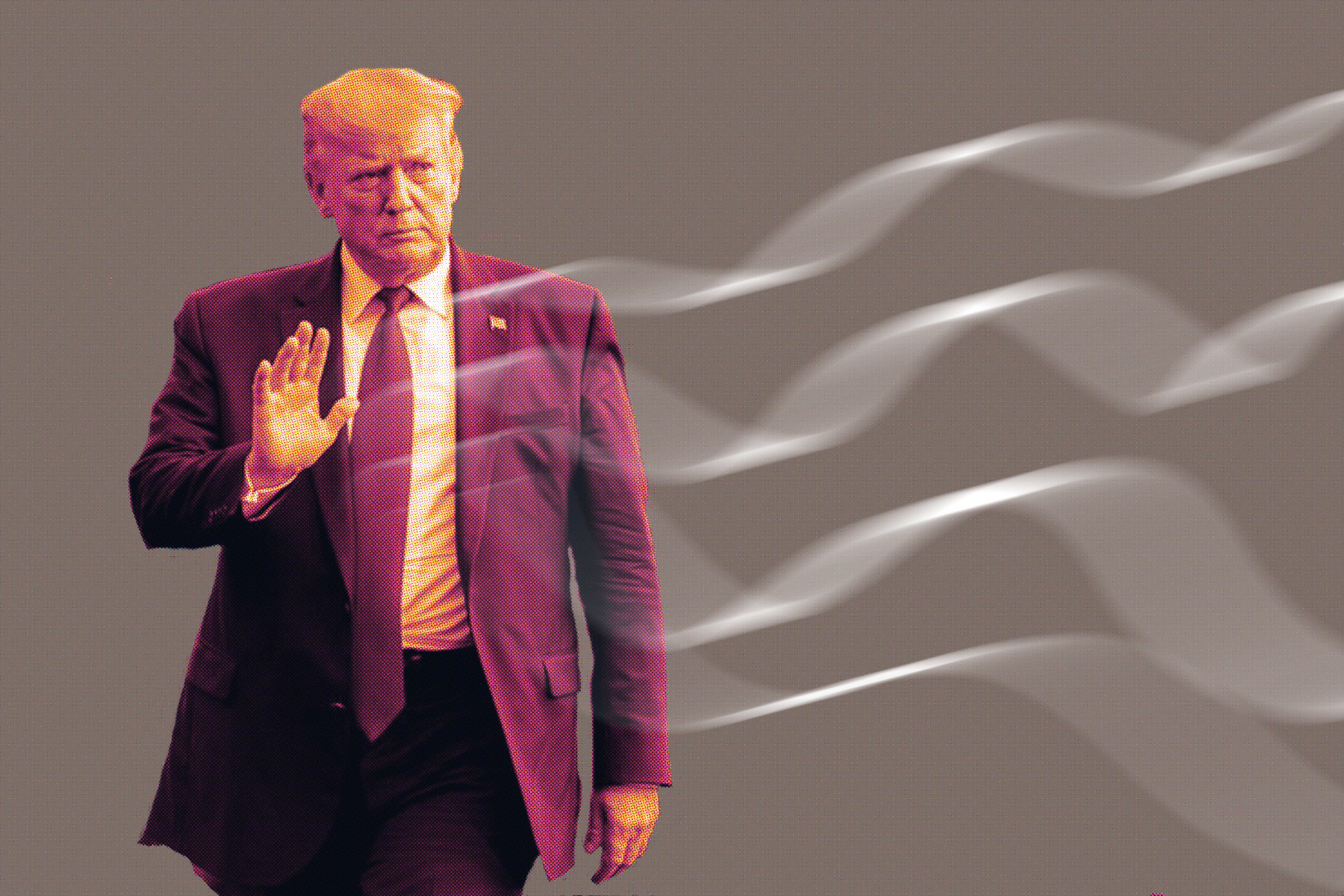
Trump winning the 2024 election heralded, brought about, or confirmed something that has been called the “vibe shift”. One of those phrases understood by everyone and no one at the same time.
What vibe were we shifting from? I’d suggest it was the boiling-the-frog institutional insanity we were all being subjected to, and having to pretend was normal, as critical race theory and intersectionality ruled the roost and seeped into every corner of American life.
The country was being forced to believe and act as though borders are not necessary, citizenship a fluid concept. That America is uniquely and structurally evil, white men are bad, that two plus two equals five. We weren’t asked, just told, to go beyond reasonable accommodations for individuals who identify as trans and instead affirm that gender is only a social (or government) construct and thereby enormously plastic, and suitable material for schoolchildren to learn and be. On top of that, we were being told that a woman with next to zero accomplishments, a fantastic set of bangs and nothing to say, was a stellar presidential candidate. Which seemed about as plausible as Biden being in peak health.
The triumph of the Trump campaign, the vibe shift, was the sudden relief that while the academy, media, and government told us these things were true, and while they appeared to offend the most basic of “common sense”, they were in fact minority opinions, and were wholesale rejected at the ballot box.
This rejection landed Trump with the celebrations for the country’s 250th birthday, co-hosting the World Cup, the Olympics, and if that wasn’t enough, also landing the first American Pope in the Vatican. Even a glance up to the night sky that inauguration week gave stellar witness to American developments.
It was the “relief” of the insanity being over that characterized the vibe shift. Post vibe shift we saw memes of frats protecting the Stars and Stripes, talk of religious revival, the mainstreaming of Charlie Kirk, people feeling they could speak out about diversity hires as in this viral essay from Jacob Savage. The US Army became less about being a beacon of “diversity” and more about being able to execute a military strike that took out a dictator with no American casualties, without leaving $7.12 billion of equipment for terrorists to use. But here some of my readers, if they managed to get past the illustration, would say—perhaps rightly—that I was regurgitating Republican talking points.
The vibe shift was also about the speed of change. Domestically, the taking on of multiple fronts at once has been staggering: cartels, fentanyl, human trafficking and cross-border crime, pharmaceutical prices, big credit, elite education, and election integrity. A breathtaking flurry of executive orders that left journalists and commentators having to relearn how to do their jobs.
Even small things were noticeable. The White House used a new font. Trump’s first appearance at Davos in 2025 came with a distinctive Southwest palette, and a huge step away from the blue and white set pieces used by global leaders. The Press Secretary soon set about packing the room with new media while removing credentials of stale legacy journalists.
The conversation around multiculturalism has diversified again. DEI policies, as with most leftist approaches—such as ESG or climate change—fuses analysis of the problem with the policy solution. To reject the solution is to reject the problem. Merit was back on the menu. Funding for elite universities and public schools that refused to diversify their point of view would get funding removed.
Globally the vibe shift is one that moves away from the idea that governments can only “monitor situations” or put on photo ops at palaces. Trump has broken out of the straightjacket of decades-long norms that seem only to sustain a loss of power and wealth to Asia. He has been rethinking international aid, the Western hemisphere, and repositioning to a more realistic acceptance of a microwave hot strategy war with China.
But the thing with the vibe shift is that it is by no means permanent. In fact, it feels quite brittle. First, the Trump administration’s 100-day executive-order rollout has perhaps petered out. Trump, rather, has become a sort of President Emeritus, primarily involved in international travel, and keeping America’s armed forces out of war while kept war-ready through the exercise of surgical strikes and hemispheric flexing.
Domestically, however, the administration is quite at sea. It is clear DOGE fizzled out fast, and the exposure of alleged welfare fraud in Minnesota has led to almost no clarity of action from the White House. If anything, trust in the Trump administration from its loyal followers could be souring, with AG Pam Bondi getting much of the criticism for a failure to prosecute any Democrat for the supposed crimes of stealing an election, bungling the Afghanistan departure, admission of terrorists through Biden’s soft border approach.
The vibe shift is also brittle because MAGA appears to be fracturing. The election posed a disruptive coalition of big tech, evangelicals, the party faithful and MAHA, against the colossal might of the Democratic electioneering machine coalesced around one insider-picked candidate anointed by the media. But this coalition has broken down. The evangelical wing represented by the Faith Office has been noticeable only for its complete absence. Kennedy has been sidelined to the successful removal of a red colorant and inverting the food pyramid.
But most importantly, the conservative commentariat and think tanks that support it are undergoing drastic reorganization.
Bush-Romney types were already sidelined as Republicans in Name Only. National Review types have set themselves apart from the Trump administration as critics speaking truth to power, usually with disdain. The Wall Street Journal took on a Trumpskeptic tone early on.
Rising stars in a new media firmament, Tucker Carlson, Candace Owens, Megyn Kelly, and Ben Shapiro, have collapsed in a rout over antisemitism. Even The American Conservative has moved into a bizarre antisemitic-seeming position. The titanic Heritage Foundation has wobbled with reports of alleged loss of staff and donors to the Pence team.
The assassination of Charlie Kirk robbed the right of a much-needed outlier: a hate figure for the Left because he put forward pretty normal positions for those on the right (family, faith, and free speech) to university students who had never had the chance to hear such concepts before, seemingly. TPUSA is emblematic of the brittle nature of the vibe shift too—similar to a peculiar form of charismatic mega church evangelicalism that perhaps alienates as much as it welcomes.
Perhaps all this change, since coming to power, is part of a realignment of political parties. While Democrats are being pulled into the dark hole of Marxist-Islamism, there must be former Democrat voters made homeless by this. Similarly MAGA may leave others by the wayside, but in their centrist tone former mainstream Republicans may not be fit to inherit this new Republicanism. But the main point about MAGA is that—if it is uniquely tied to Trump—it cannot last.
I think this is what has confused me the most about Trump’s international outreach success: how has he managed to bounce so many to his agenda when he only has three years left on the clock? Even the 24-hour turnaround at DAVOS from the NATO Secretary General agreeing to plots of land on Greenland as US sovereign territory for military bases seemed a lightning-quick success. Trump must be exceptional at identifying and leveraging short-term pain and gain points.
Yet domestically the success is less obvious. Just on cartels, individuals connected to Tren de Aragua still operate on American soil, as do Mexican cartels like Sinaloa, CJNG (Jalisco New Generation), and Cartel de los Soles. Extraditions from Mexico are welcome but the appetite among the electorate, as Minneapolis shows, is weak-stomached for really grasping at the problem of transborder crime head-on.
The vibe shift is also brittle because its presentation is brittle. There has been, since the election win, a zero-sum-game approach to the triumph of MAGA. This was a sort of America relaunch. But the communication and branding positioning of The White House has had a real estate quality about it. Very literally with the new marble-floored rose garden and its to-die-for mustard accessories, and the demolition of the East Wing. The presentation of the vibe shift has been triumphalistic. When AI videos of shitting on voters or laughing at sombreros are posted, I think, wow, you are in the right but there’s no need to be such a dick about it.
And here, the most fragile part of the vibe shift is that it doesn’t really give any room for accommodating or accepting the reality that not everyone is in on it. I don’t mean just the No Kings types or Robert De Niro. And of course the President’s own personality marks this. Pelosi remarked that Biden was one of the country’s most consequential presidents. While that was patently nonsense, it is likely true of Trump—he will be remembered as a great and consequential President. His accomplishments are impressive, and at times I wish he could simply enjoy them more without the need to insult someone. But people do people things.
Don’t get me wrong. My concern in writing here is because I would love the vibe shift to be permanent. I would love it if the wide spectrum of voters from across America’s geography, income brackets, race and religious backgrounds who voted for Trump in a turnout for common sense remained as a relatively solid consensus.
But the vibe shift is, surely, ephemeral because the apparatus for maintaining the alternative is still very much in place. Elite academy output has not shifted on this issue. DEI is momentarily veiled, antisemitism is still acceptable if guised as pro-Palestinian protest, and the belief that America is the primary evil in the world still animates much of the activist Left.
The signs of a vibrant alternative being very much alive is evident when Governor Newsom is considered a global statesman, despite the objective mess he has made of California, Kamala Harris polls as the most popular potential Democratic president for 2028, and Mamdani makes a meteoric rise to Mayor of New York. Republican pundits may have been surprised by Spanberger’s win in Virginia and the flurry of activity coming out of Richmond—tax hikes, DEI, schools being able to trans your kids without parental consent, second amendment rights incursions, every effort to undermine electoral integrity, banning gas powered leaf blowers and abortion up to birth. But I suspect this was exactly what many Virginians voted—or at least yearned—for.
Critically, it is not entirely sure how much of the vibe shift is being embedded into legislation. Every single “win” of the last year appears to be highly reversible.
USAID has been functionally abolished, but it still exists—requiring an act of Congress to eliminate it. In the same vein, the Department of Education still persists, even if competencies have been moved to other departments. For all the upset about deportations, Trump’s ICE man, Tom Homan, was Obama’s. Clinton and Obama each deported more people than Trump. This raises two concerns. Why is Trump’s efficacy so low, and why are so many of today’s electorate upset about it?
Embedding the vibe shift is going to require more than vibes. Yes, winning midterms, and having Congress pass federal mandates over election integrity, abolition of departments, and to get some actual traction on welfare fraud and implementing DOGE savings would embed some of this. Executive orders are the most brittle of legislative tools.
Making the vibe shift more solid is going to be about the next presidential candidate. First, it will need to be another one. A third term President Trump may prolong the shift but at considerable cost to its continuity through the crisis it would create. Trump’s ingenuity for putting a breath of Queens air into American politics has likely been his single biggest contribution to American politics: a course correction. In contrast to the Democrats, Trump and the GOP have cultivated exceptionally high-caliber candidates. Whoever comes next, vibes are going to need to move on from nostalgia and fast into an optimistic future that accommodates more of my fellow Americans.
Image: Chris Bullivant (Photo Creative Commons, National Archives Service.)
What to read next?